USS Enterprise Under Tow to Scrapyard as U.S. Military and NATO Adjust Airfield Dispersal, Mine Procurement and Force Protection
Updated · 2026-11-08 11:47 · 6 sources cited
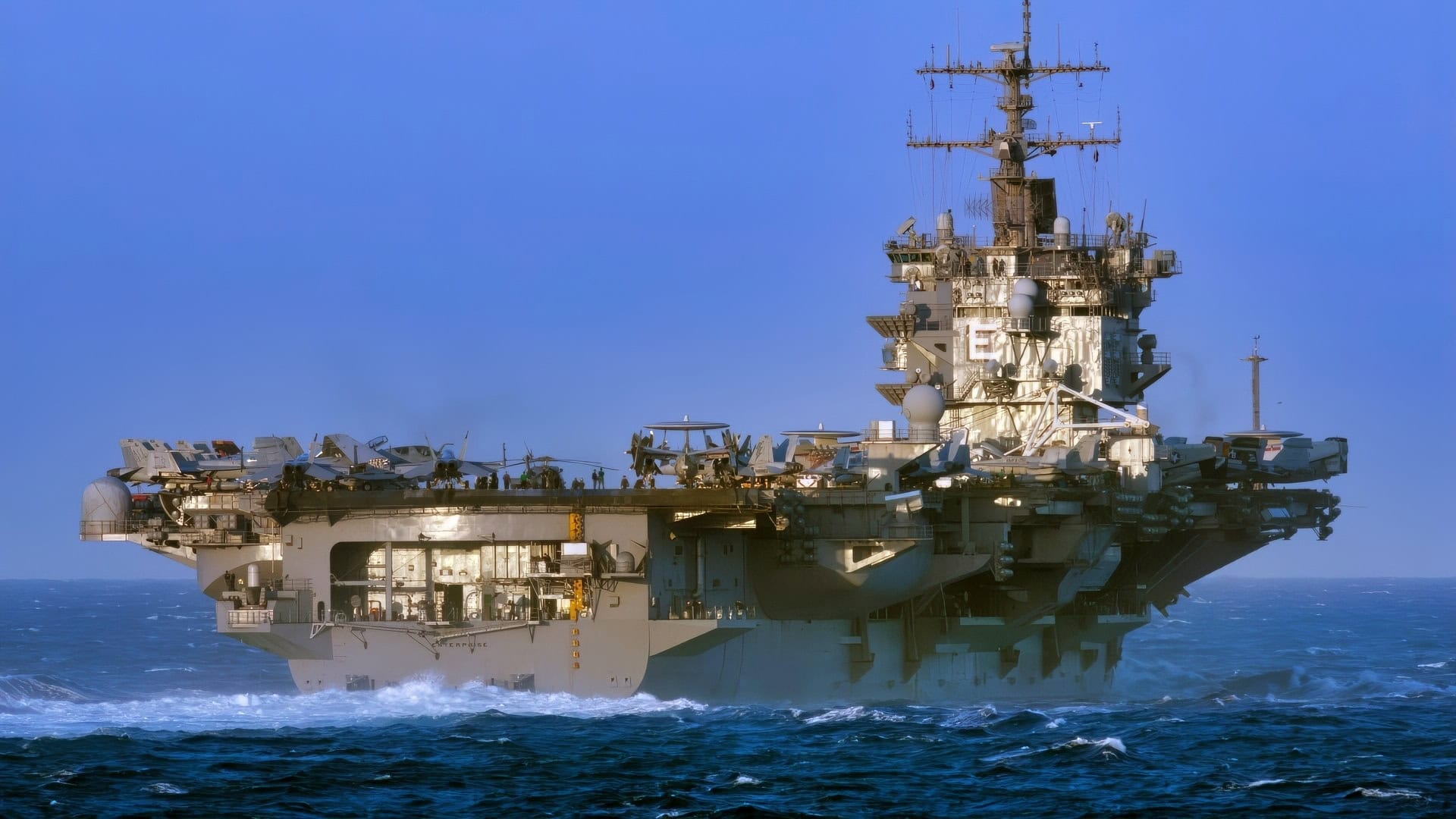
The U.S. Navy's first nuclear-powered aircraft carrier, USS Enterprise (CVN-65), was towed from Newport News, Virginia, to Mobile, Alabama, for scrapping on November 2, 2026, while the U.S. Air Force is advancing dispersed operations at airfields in the Northern Mariana Islands, NATO countries are jointly buying Finnish 'Blocker' mines, and U.S. European Command has launched a force protection campaign. These developments involve platform retirement, base layout, maritime blockade and personnel safety, together reflecting how the U.S. military and its allies are adjusting their readiness posture amid multiple threats.
Enterprise Heads for the Scrapyard
On November 2, 2026, the U.S. Navy's first nuclear-powered aircraft carrier, USS Enterprise (CVN-65), was towed from Newport News, Virginia, to Mobile, Alabama, where NorthStar Maritime is scheduled to dismantle it by September 2030. The ship was commissioned in 1961 at a cost of $451.3 million; its total scrapping cost is $1.43 billion: about $1.3 billion to inactivate and defuel its eight reactors, $111 million in pier costs, and a $418.5 million NorthStar dismantling contract; the contract was rebid after a protest by Huntington Ingalls Industries and came in about $118 million cheaper than the previous bid. Enterprise was launched in 1958 and was the eighth U.S. Navy vessel named Enterprise; its crew nicknamed it 'The Big E'.[1] Enterprise took part in the Cuban Missile Crisis blockade, air combat and bombing in the Vietnam War, the evacuation of Saigon, strikes on al-Qaeda and the Taliban after 9/11, and Persian Gulf deployments supporting Operation Enduring Freedom. After completing its final deployment in 2012, the ship was inactivated; it was decommissioned in 2017. Dismantling a nuclear-powered carrier involves defueling reactors and long-term storage, with high costs and long timelines; its final disposal was once stalled by a contract dispute and only moved to the towing phase after the legal dispute was resolved.[1]
Pacific Airfield Network Supports Agile Combat Employment
The U.S. Air Force hopes to conduct more than 6,000 aircraft operations annually at four airfields on three U.S. islands that are part of the Northern Mariana Islands, including the WWII-era Tinian North Field, which is being refurbished. The Department of the Air Force published a notice of intent to prepare an environmental impact statement assessing potential social, economic and environmental effects of training and operations at Saipan International Airport, Tinian International Airport, Tinian North Field and Rota International Airport. The islands are part of the Commonwealth of the Northern Mariana Islands, an unincorporated U.S. territory. The proposed training will support the Air Force's Agile Combat Employment (ACE) concept, which emphasizes dispersing forces across airfields, maneuvering between them and sustaining operations under a range of conditions, with the goal of making it difficult for an adversary to paralyze the entire operational system by striking a single base.[2] The environmental assessment will examine small, medium and large training exercises held several times a year at each airfield and lasting several weeks each, with up to 1,200 fixed-wing and 320 rotary-wing operations per airfield per year; the alternative scenario would allow up to 1,400 fixed-wing and 384 rotary-wing operations per airfield per year, and there is a no-action alternative. Each airfield is also proposed to support up to 550,000 gallons of fuel, up to 1,000 personnel, temporary expeditionary infrastructure, and munitions handling including chaff and flares. Infrastructure at the four airfields ranges from mature commercial airports to expeditionary operating locations; the three islands are dozens of nautical miles apart and less than 100 nautical miles north of major military bases on Guam, making it easier to assemble and deploy forces. ACE's development is tied to U.S. concerns about adversaries' long-range strike capabilities and missile forces. Dispersal can reduce the risk of a single base being destroyed in a concentrated attack, but it also brings constraints such as environmental review, logistics support and local social impact.[3]
M113: From a Farm Machinery Company Product to Ukraine's Battlefield
The M113 armored personnel carrier was built by FMC (Food Machinery and Chemical Corporation), using an aluminum alloy hull developed with Kaiser Aluminum, light enough to be parachuted from transport aircraft, able to ford rivers, and able to stop rifle rounds and artillery shell fragments. The basic hull can carry 11 to 13 soldiers and has a hydraulic ramp at the rear for rapid dismount. More than 80,000 were produced between 1960 and 2007; the U.S. Army bought more than 33,000 between 1960 and 2007, another 53,000 were sold overseas, and Ukraine still uses several hundred in combat.[4] The M113 spawned a command post vehicle, a 4.2-inch mortar carrier, a TOW antitank missile launcher vehicle and a Vulcan cannon-armed variant, the latter capable of firing 3,000 rounds per minute. In Vietnam, mines, RPGs and heat prompted soldiers to ride on top, mounting machine guns like a stagecoach. The M113's production volume and derivative capacity show that a simple, cost-controlled armored chassis that can be airlifted and ford rivers can adapt to different missions through continuous modification; its protection is limited, but it can still serve as a 'battle taxi' in low-intensity conflict and attrition warfare, as Ukraine's continued use demonstrates.[4]
NATO Nations Jointly Procure 'Blocker' Mines
Denmark has become the latest country to buy Finland's 'Blocker' naval mines, one day after Lithuania decided to proceed with its own contract. Finnish and Estonian forces already operate these proximity sea mines; Estonia bought them in 2021. Denmark's purchase falls under a pentalateral joint procurement agreement involving Finland, Lithuania, Germany and Norway; the latter two have not yet publicly announced a contract.[5] Lithuania's Ministry of Defense said its procurement is being carried out under Naval Mines Cooperation (NMC), a procurement agreement stemming from a program launched in 2024; beyond joint procurement, it aims to strengthen cooperation on logistics, training, exercises and system service life. The Finnish military signed a contract with manufacturer Forcit Defence in June on behalf of the five countries participating in the NMC procurement scheme, worth 'hundreds of millions of euros'. Ten countries initially signed the declaration of intent: Belgium, Latvia, Lithuania, Norway, Poland, Sweden, Denmark, Germany, Finland and Estonia, all NATO members; Germany may announce a procurement decision this year. Forcit Defence promotes 'Blocker' as having explosive power equivalent to one ton of TNT and using multiple sensors to detect ships. Tensions in the Baltic have increased since the 2022 Russia-Ukraine conflict. After Finland and Sweden joined NATO, the Baltic is almost surrounded by NATO countries except for the Russian coasts of Kaliningrad and Leningrad Oblast; Russian ships need to pass through chokepoints such as the Danish straits to reach the open ocean, so mine procurement carries implications for competition over maritime chokepoints.[5]
U.S. European Command Launches 'See Something, Do Something'
U.S. European Command is asking military personnel, families and civilian employees to watch for suspicious behavior in and around military facilities and to protect their digital footprint when moving around Europe. The initiative, called 'See Something, Do Something', aims to cultivate a proactive security mindset and force protection awareness amid rising concerns over drone incursions and other hybrid threats. The command emphasized that protecting U.S. personnel and families is a shared responsibility and crucial to maintaining long-term readiness, and encouraged vigilance in crowded public places such as transportation hubs and reporting unusual behavior or unattended items to military police or local authorities.[6] The initiative also requires strict digital discipline: review social media privacy settings, turn off geotagging in fitness apps and mobile devices, and avoid posting location and travel information online; security experts recommend changing daily commute routes, travel times and off-base activities to reduce predictability. The commander of U.S. European Command, Alexus Grynkewich, said personnel and families are the most valuable asset and security is the top priority. The command did not identify specific threats, but since the 2022 Russia-Ukraine conflict, hybrid activity in Europe has become more aggressive: undersea pipelines and cables have been damaged, GPS jamming and spoofing have become more frequent, and drone incursions around military bases and airports have increased; in September, Germany accused Russia of planning to use explosive drones to attack Leipzig/Halle Airport. In the same month, leads from a suspicious vehicle near RAF Fairford led to the arrest of several people over a suspected terrorist plot; British officials said Iran may be involved, and the incident prompted the United States to withdraw B-1 bombers stationed at the base.[6]
Common Trends and What to Watch
From Enterprise being towed to the scrapyard, to the Northern Mariana Islands airfield network supporting dispersed operations, to Baltic nations jointly procuring mines and European Command strengthening force protection, these threads together show that the U.S. military and NATO are simultaneously dealing with aging legacy equipment, base vulnerability, competition over maritime chokepoints and hybrid threats below the threshold of war. Going forward, watch whether Enterprise's dismantling proceeds on the September 2030 milestone, how the U.S. Air Force's environmental impact assessment balances training needs with local impacts, whether Germany joins the 'Blocker' procurement, and whether European Command's protection measures become further linked to specific incidents.
Sources
- [1] 90,000-ton USS Enterprise CVN-65 Cost $451 Million to Build and $1.43 Billion to · 2026-11-06 23:03 · www.19fortyfive.com
- [2] US Air Force eyes reviving WWII air bases in the Pacific · 2026-11-06 23:28 · www.militarytimes.com
- [3] US Air Force eyes reviving WWII air bases in the Pacific · 2026-11-06 23:28 · www.defensenews.com
- [4] A Farm Machinery Company Built Over 80,000 M113 Battle-Taxis. Ukraine Is Still F · 2026-11-06 22:29 · www.19fortyfive.com
- [5] Denmark, Lithuania latest Baltic navies to buy ‘Blocker’ mines through Finnish s · 2026-11-06 21:49 · www.defensenews.com
- [6] US European Command launches vigilance campaign as hybrid threats mount · 2026-11-06 23:39 · www.militarytimes.com