US Army M1E3 Live-Fire Tests, B-21 Production Expansion, and Canada’s Type 212CD Submarine Push
Updated · 2026-11-09 11:36 · 4 sources cited
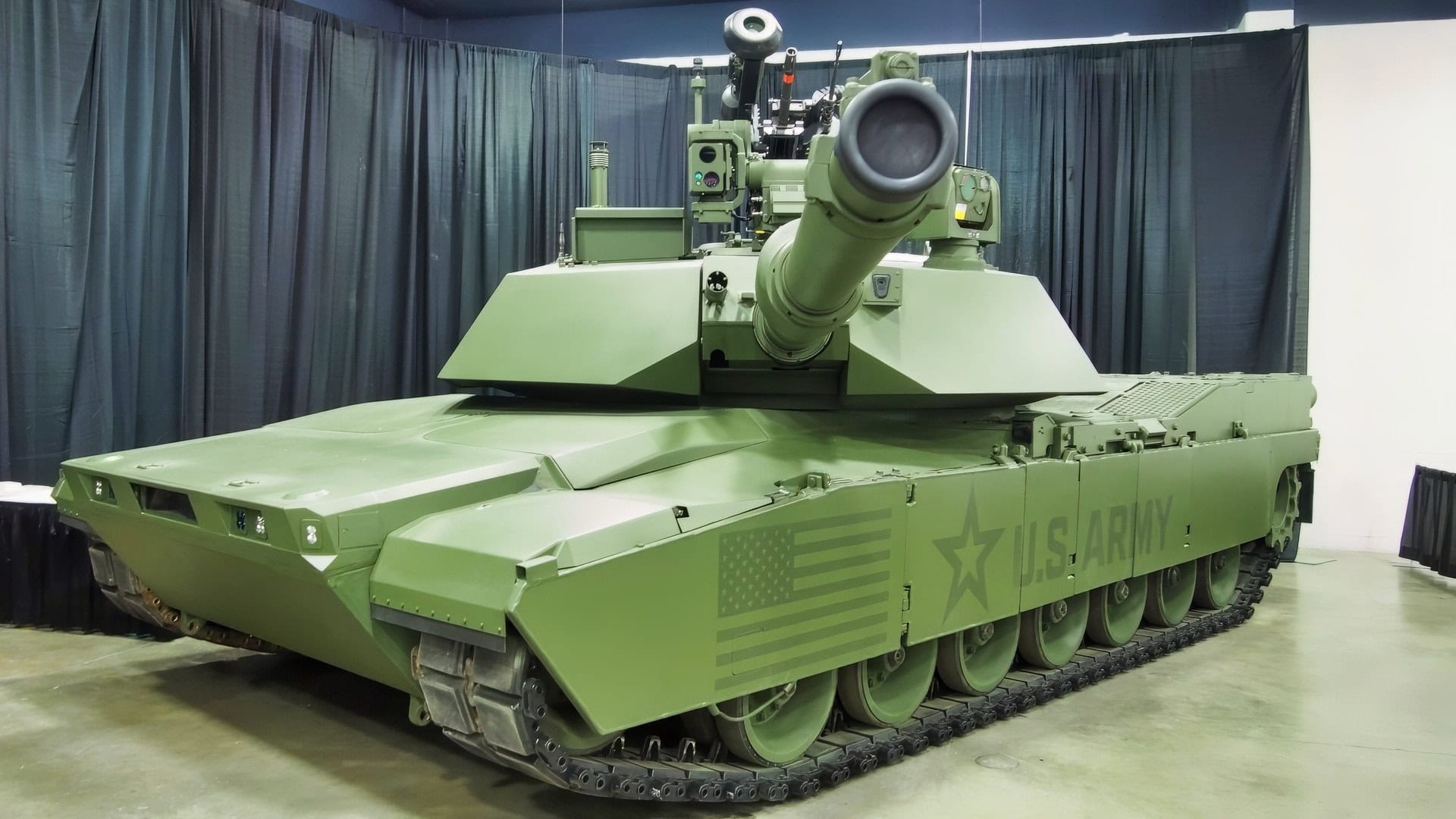
From land combat platforms to strategic bombers and undersea forces, the United States and Canada are adjusting their equipment portfolios for future high-end conflict. A decades-old F-14 carrier landing also brings the operational risk behind those adjustments back into view.
M1E3 Tank: Less Weight, an Unmanned Turret, and Hybrid-Electric Drive
The US Army’s M1E3 Abrams main battle tank is moving from the incremental upgrades of the M1A2 to a redesign. According to public specifications, the Army wants to cut the Abrams’ combat weight from more than 70 tons to about 60 tons. A power solution based on the Honeywell AGT1500 gas turbine is being replaced by a hybrid-electric drive built around a diesel engine, with the goal of halving fuel consumption and reducing battlefield noise. The new tank also moves the crew into a protected compartment below the hull, paired with an unmanned turret and an autoloader, so three crewmembers can do the work previously done by four. [1]
In firing-trial imagery released in October, the US Army showed the M1E3 alongside the XM30 infantry fighting vehicle; a K9MH self-propelled howitzer also appeared in the test scene. Lower weight can improve strategic mobility, reduce transport requirements, and add operational flexibility. Hybrid-electric drive and the unmanned turret seek a new balance among survivability, signature, and manpower needs. Whether those benefits materialize, however, depends on the reliability of the new powerpack, autoloader, and hull layout in live fire and high-intensity use. The program plans include four early prototypes. [1]
B-21: A One-Million-Square-Foot Final Assembly Line and Accelerated Funding
Northrop Grumman has broken ground on one million square feet of manufacturing space at Air Force Plant 42 in Palmdale, California, as the final assembly line for the B-21 Raider stealth bomber. The federal government added $4.5 billion through 2025 budget reconciliation legislation to accelerate production, and Northrop is putting in another $2.5 billion of its own. The B-21 is meant to replace the aging and insufficient B-2 Spirit; it is now in operational testing, Air Force leadership says the program is on schedule, and the first B-21 will be delivered to Ellsworth Air Force Base. [4]
The production-line expansion and added funding are intended to raise capacity without sacrificing aircraft quality or program stability. But more capacity does not automatically mean a matching increase in deliveries; it still depends on infrastructure, labor supply, and supplier readiness. The previous 12-day war against Iran and ongoing conflicts have been cited to stress the importance of having enough long-range stealth bombers. [4]
Canada’s Submarine Replacement: Type 212CD and the Victoria-Class Gap
Canada is all but certain to replace its four Victoria-class submarines with Germany’s Type 212CD, and Ottawa has said the purchase will be for 'up to 12' boats. Reports say the order will come in two batches, eight first and possibly four more later, at an estimated C$20 billion to C$24 billion, with the first delivery no earlier than the mid-2030s. Germany’s TKMS edged out Hanwha Ocean in the competition. The current Victoria-class boats were originally Royal Navy equipment from the Cold War; Canada bought them in the late 1990s, and long refits, maintenance problems, and inadequate reliability have limited their deployments at sea. [3]
Canada has only four Victoria-class submarines, and even if all were available, they would not be enough to patrol the vast Pacific, Atlantic, and Arctic waters. Navy officials treat the replacement program as urgent, and a warming Arctic has made sovereignty patrols and questions of competition and cooperation more prominent. Buying in two batches can control the pace, while discussions over whether unmanned underwater vehicles could take on some tasks at lower risk and cost are also shaping the evaluation. [3]
The F-14 Landing: 14 Feet of Clearance and a Deck Pitching 6 to 8 Feet
Years after the F-14 retired, one extreme-weather carrier landing is still repeatedly cited by aviation historians and enthusiasts. US Navy Captain John 'Hawk' Smith was flying an F-14A Tomcat, with Lieutenant Joe 'Krish' Zahalka as radar intercept officer, when they encountered rapidly deteriorating weather aboard USS Enterprise (CVN-65). Wind shear, gusts, and heavy rain erased the horizon, the sea, and the wake. Smith planned to catch the third arresting wire; under normal conditions, that would leave about 14 feet of clearance between the tailhook and the ship’s stern ramp. But the carrier pitches 6 to 8 feet in heavy seas, so the clearance changes sharply. If the aircraft dropped below the glideslope while the deck rose, the tailhook could close on the stern. [2]
The key to this landing was not only pilot control but also the landing signal officer’s experience and precise management of the glideslope. Smith also had F-4 Phantom II flight experience, qualifications as an F-14 test pilot, and LSO credentials, making the case especially instructive. For modern carrier aircraft, when complex weather and deck motion combine, landing clearance remains a high-risk element. [2]
Shared Trend: Equipment Renewal and Operational Risk in Parallel
These threads point to the same trend: the United States and Canada are directing resources toward land combat platforms, strategic bombers, and undersea forces better suited to high-end conflict, while using production-line expansion, batch purchases, and test validation to control schedule and risk. What to watch next includes the live-fire performance of the M1E3’s power and autoloader systems, whether B-21 capacity translates into deliveries, the final number and delivery pace of Canada’s Type 212CD boats, and the safety margins for carrier aircraft landing in complex sea states. [1][3][4][2]
Sources
- [1] The US Army’s New 60-ton M1E3 Main Battle Tank Is Already In Live Fire Drills · 2026-11-08 22:27 · www.19fortyfive.com
- [2] A US Navy F-14 Tomcat Landed Blind on Aircraft Carrier USS Enterprise CVN-65, Ai · 2026-11-09 08:43 · www.19fortyfive.com
- [3] Canada’s Navy Is Getting Ready to Dump that Victoria-Class Submarine for New Typ · 2026-11-08 23:20 · www.19fortyfive.com
- [4] The US Air Force B-21 Raider Stealth Bomber Is Hitting the Warp Speed Button to · 2026-11-08 23:02 · www.19fortyfive.com