France's Sixth-Gen Fighter Targets 2031 First Flight as Canada Has Just One Usable Submarine: Uneven Equipment Renewal
Updated · 2026-11-08 11:37 · 6 sources cited
France is turning to a solo sixth-generation fighter after setbacks to the Future Combat Air System, while Italy keeps the Cavour as a flexible medium-carrier asset. At the same time, the U.S. Army has renamed its cook occupation, Canada is still struggling with the availability of secondhand submarines, and the Eurofighter Typhoon is still competing for orders in the age of fifth-generation stealth fighters. Together, these developments point to one reality: countries are reallocating resources among high-end platforms, legacy equipment, and personnel systems.
France's Sixth-Gen Fighter: ACF Targets 2031 First Flight
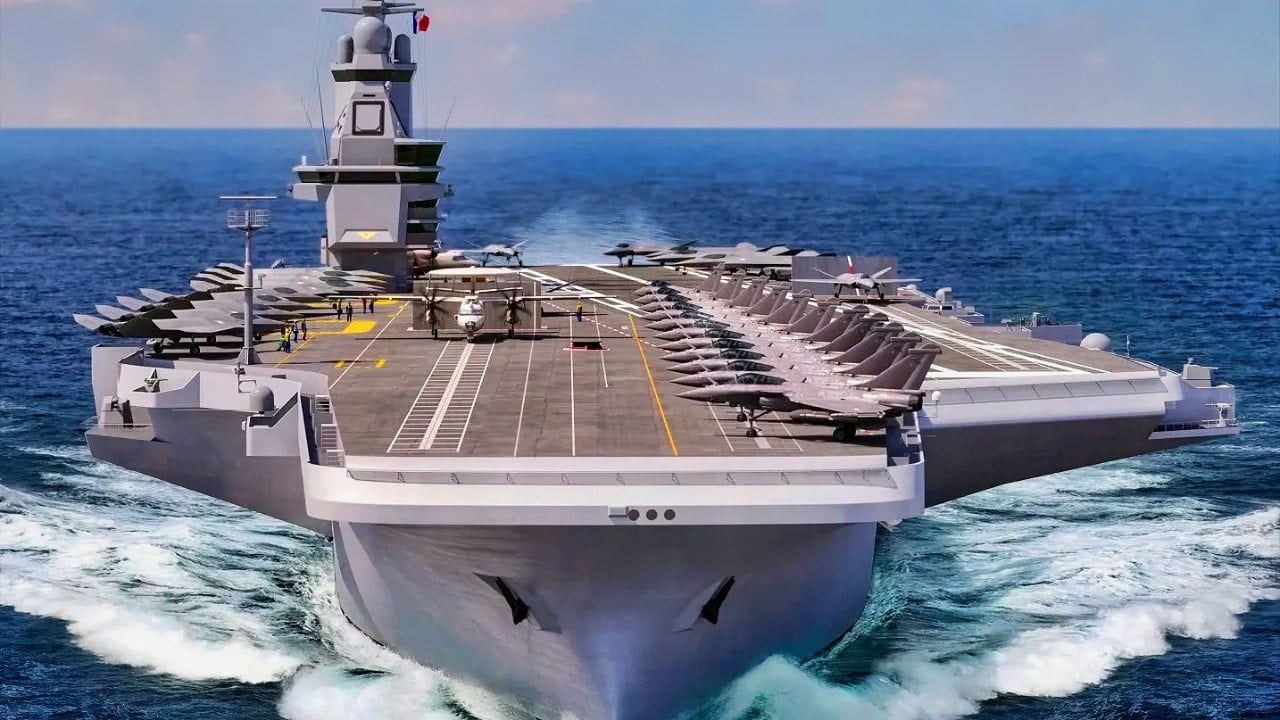
After the Future Combat Air System (FCAS) program ended, France is advancing the Avion de Combat du Futur (ACF) under Dassault Aviation's leadership. Dassault CEO Eric Trappier said the company is 'really frustrated' after 10 years without flying any new aircraft, and is pushing for a working demonstrator as early as 2029; if work begins now or in early 2027, first flight could come in 2031. The ACF is expected to replace the Rafale fighters now in service with the French Air and Space Force and Navy, and may operate from the 80,000-ton France Libre carrier still under development. Dassault is already in close contact with shipbuilder Naval Group. Trappier also said the ACF will be smaller than the next-generation fighter planned under FCAS, requiring a compromise between aerodynamics and stealth, and that 'a fighter still has to be a fighter'. Some observers believe the aircraft could use a derivative of the Safran M88 engine. [1]
Italy's Cavour: A Multirole Medium Carrier
Italy's Cavour is a conventionally powered short takeoff/vertical landing carrier built by Fincantieri and completed in 2009. It displaces more than 28,000 tons at full load, exceeds 28 knots on four gas turbines, and has a range of 7,000 nautical miles at 16 knots. The ship has a 234-meter ski-jump deck and six operating spots, plus eight parking spots. It normally embarks 18 to 20 F-35Bs or AV-8Bs and can also carry EH101 and NH90 helicopters. Its defensive suite includes two 16-cell Aster 15 vertical launch systems, two 76mm guns, and 25mm cannons. Beyond its role at the core of a carrier strike group, the Italian Navy also uses it as a command node, an amphibious and logistics platform, and a hospital ship, reflecting the flexibility of a medium carrier across multiple missions. [2]
U.S. Army: 92G Role Renamed 'Tactical Field Feeding Specialist'
The U.S. Army announced that the 92G occupation, formerly called culinary specialist, is now called 'tactical field feeding specialist' during a late-October ceremony at Fort Lee, Virginia. Col. Stacy Moore-Callaway, Quartermaster commandant, said the change is not for superficial rebranding or administrative convenience, but because the character of war has changed. As the Army shifts to training for large-scale combat operations, soldiers responsible for feeding troops also need to understand battlefield logistics in a contested environment. The Army formalized the cook role as the 94B Food Service Specialist in the 1960s and redesignated it as the 92G Culinary Specialist in 1995. Sgt. Maj. Paul Denson said at the ceremony that tactical field feeding personnel must understand food production, nutrition, and food safety, and provide sustained endurance so soldiers can remain combat-capable in a prolonged close fight. [3]
Canada's Victoria Class: Only One of Four Secondhand Submarines Usable
Canada bought four secondhand British Upholder-class submarines for $896 million in 1998. They were delivered between 2000 and 2004 and named Victoria, Windsor, Corner Brook, and Chicoutimi. The boats received 'Canadianization' modifications, including new fire-control and communications systems and integration of the Mk 48 heavyweight torpedo. The purchase was not intended to build a large submarine fleet, but to avoid a capability gap and preserve crews and the training pipeline. However, the submarines had already sat in salt water before being sold, and no other navy operated the class, leaving spare parts scarce and requiring bespoke solutions. Chicoutimi suffered a fire during its 2004 delivery voyage, killing one sailor and injuring eight, and did not enter service until 2015. Corner Brook ran aground near Nootka Sound in 2011, and repairs lasted a decade. In 2012 the fleet logged zero days at sea for the entire year. By 2026, only Corner Brook was described as operational, and the German-built Type 212CD replacement will not arrive until the mid-2030s. [5]
Europe's Fighter Market: Typhoon Still Chasing More Than 200 Orders
Even as fifth-generation stealth fighters dominate air-combat debates, the Eurofighter Typhoon consortium is still actively seeking more than 200 orders, above its 2025 expectation of 134. Turkey has ordered 44 Typhoons, which may be one reason for the higher order forecast. Airbus is preparing a formal bid for Portugal's plan to replace 24 F-16s and says the proposal is in final preparation and will be submitted before the end of the year. Portugal's competitors also include the F-35, Gripen, and France's Rafale. Poland plans to buy 32 more fighters to strengthen its air-superiority capabilities, but after securing a $4 billion U.S. Foreign Military Financing loan, it is more likely to continue buying F-35s. Bangladesh's earlier Typhoon deal with Italy's Leonardo also fell through last year, showing that the market for 4.5-generation fighters still has openings but remains highly competitive. [6]
Patton's Battles: A Historical Echo of Speed and Sustained Pressure
In assessments of Patton, his 1943-1944 battles are often used to explain his belief in winning through speed. In March 1943, after the setback at Kasserine Pass, Patton took command of the U.S. II Corps and immediately tightened discipline and restored the unit's confidence; on August 17 of that year, he led the Seventh Army into Messina. He was later reprimanded by Eisenhower for slapping hospitalized soldiers and lost command for Normandy. On August 1, 1944, the Third Army entered combat, and Patton drove it across Brittany and northern France, often choosing to bypass German defensive lines rather than attack them head-on. During the Ardennes offensive, after Bastogne was surrounded, the 4th Armored Division broke the encirclement on December 26. His operational thinking emphasized maneuver, surprise, initiative, and relentless attack, using tank and other mechanized formations alongside infantry, artillery, engineers, and logistics to keep the Germans from establishing defenses or coordinating a counterattack. [4]
Trend Watch: Platform Renewal Versus Sustaining Combat Power
From France's ACF and Italy's carrier to Typhoon sales, European and NATO countries continue to invest in high-end platforms and manned naval aviation while also sustaining investment in the 4.5-generation fighter market. Canada's submarine troubles and the U.S. Army's job-title change show that maintenance of legacy equipment, spare-parts support, and the fit between personnel roles and missions also determine whether forces can keep operating. Looking ahead, key questions include whether France's ACF can meet its 2031 first-flight target, what Portugal and Poland decide on fighters, how quickly Canada's replacement submarines arrive, and how a medium carrier like the Cavour performs in actual multirole deployments. [1][6]
Sources
- [1] France’s Dassault Wants a 6th Generation Fighter That Will Fly from New 80,000-T · 2026-11-07 20:45 · www.19fortyfive.com
- [2] A Guide to the Cavour, Italy’s 28,000-ton Aircraft Carrier That Carries F-35B St · 2026-11-07 22:57 · www.19fortyfive.com
- [3] US Army feeds culinary soldiers new job title · 2026-11-07 04:43 · www.militarytimes.com
- [4] 82 Years Later, General George Patton’s Best US Army Line Is Still Truly the Gre · 2026-11-07 07:57 · www.19fortyfive.com
- [5] Canada Bought 4 Used British Diesel Submarines for $896,000,000 in 1998. Just 1 · 2026-11-07 23:17 · www.19fortyfive.com
- [6] The Eurofighter Typhoon Is Selling Like Hotcakes Even in the F-35 Stealth Fighte · 2026-11-07 21:02 · www.19fortyfive.com