From 17 Inches of Armor to Counter-Drone Radar: Naval and Air Combat Puts a New Premium on Survivability and System Awareness
Updated · 2026-11-08 12:37 · 4 sources cited
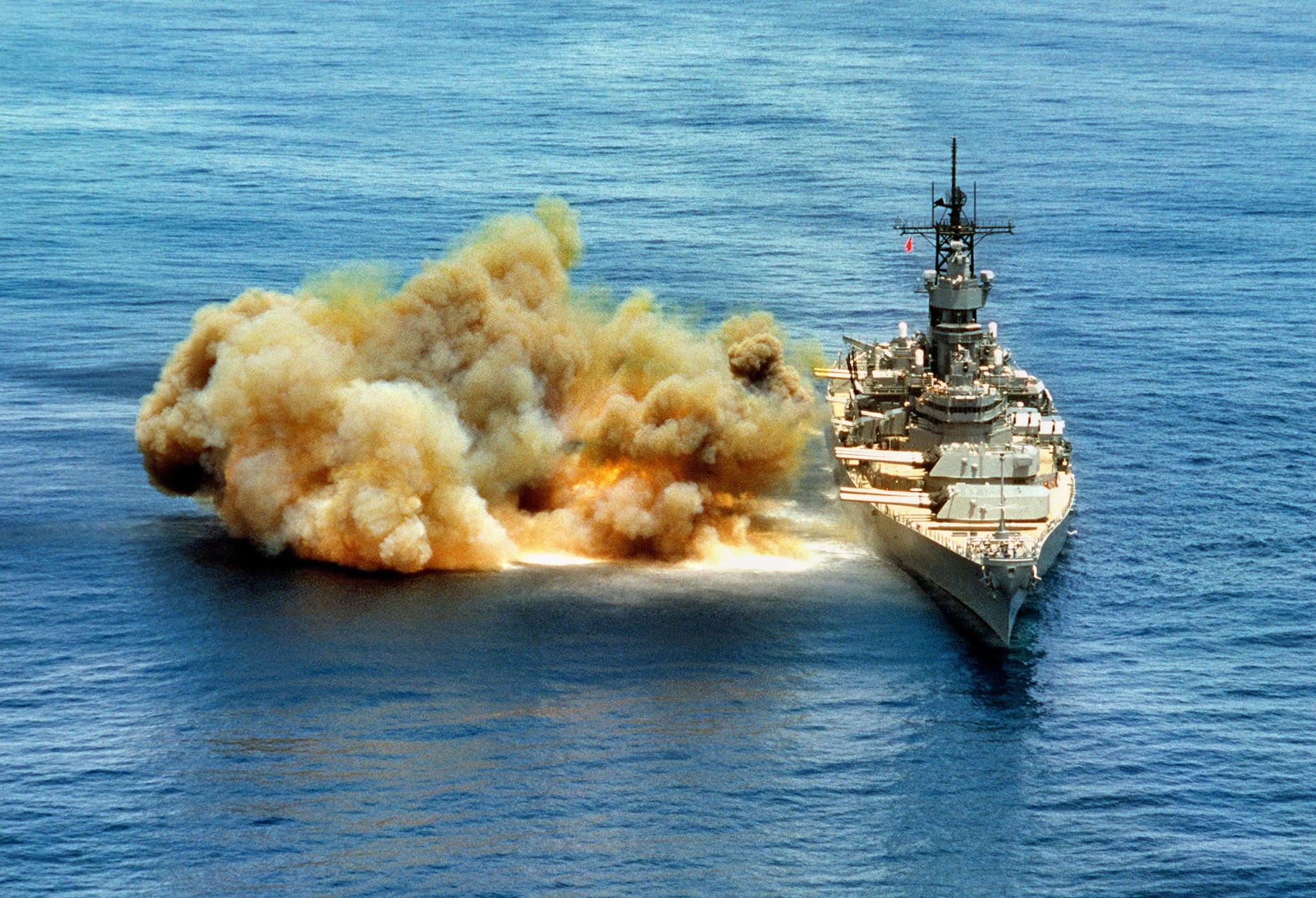
The U.S. Navy's Iowa-class battleships once embodied the survival logic of big guns and heavy armor: up to 17 inches of armor at the thickest point, four propulsion plants and nine 16-inch main guns. Today the Arleigh Burke-class destroyers that carry capital-ship-class firepower are called 'tin cans' by their sailors. Meanwhile, the secret recovery of an AIM-54 missile after an F-14A went into the sea in 1976, Shield AI's $5.3 billion acquisition of radar maker Echodyne, and Russia's use of the Rassvet satellite network for military communications over Ukraine each illuminate — from platform protection, technology protection, counter-drone sensing and battlefield communications — a renewed emphasis on system-level survivability in naval and air warfare.
Armor, compartmentation and propulsion redundancy: lessons from battleship survivability
The Iowa-class design wrapped vital spaces in armor up to 17 inches thick, creating an armored box around the bridge that resembled a bank vault; the ship had four propulsion plants on four shafts that could cross-connect steam in battle, along with multiple watertight compartments. Its nine 16-inch guns could throw shells weighing more than a ton beyond 20 miles, concentrating firepower and protection on a single platform. [1] But Churchill warned long ago that duels between capital ships were more like eggshells smiting one another with hammers: at Jutland in 1916, British battlecruisers suffered heavy losses under the guns of the German High Seas Fleet, and late in World War II Japan's Yamato and Musashi went down under sustained air attack. [1] Those cases show that armor and compartmentation improve resistance to flooding but cannot by themselves offset advances in air power. Today's Arleigh Burke-class destroyers pack capital-ship weapons into much smaller hulls, and sailors call them tin cans; a Naval War College strategist with real battleship service therefore argues that the next class of warship should remember why battleships prized armor, redundancy and watertight integrity. [1]
The 1976 F-14A loss at sea: a secret recovery mission behind a Phoenix
During NATO's Teamwork exercise in 1976, an F-14A Tomcat slid off the flight deck of the carrier John F. Kennedy 60 nautical miles north of Scotland and plunged into the sea. A runaway engine power increase caused the aircraft to slide across the deck; the pilot steered it toward the deck edge to avoid parked aircraft, and the two crew members ejected and landed safely back on deck before the jet went over the side, while three sailors were injured. [2] The aircraft sank to a depth of nearly 2,000 feet with an AIM-54 Phoenix long-range air-to-air missile still aboard — a weapon central to the Tomcat's fleet air defense, with a range of more than 100 miles. [2] The F-14 had only recently entered U.S. Navy service, and its radar, long-range missile and variable-sweep wings were regarded as hallmarks of advanced aviation technology; the jet came down near an area where Soviet surveillance ships operated, and fearing Soviet acquisition of the technology, the United States launched an intensive and highly classified recovery operation. [2] The episode mattered not only for the aircraft itself but for the combination of onboard sensors, missiles and deep-water salvage capability: a platform accident became a technology-protection and counterintelligence operation.
The $5.3 billion Echodyne deal: counter-drone competition moves to the sensor layer
Shield AI announced an agreement to acquire radar maker Echodyne for $5.3 billion, a transaction that expands its drone-warfare capabilities. Echodyne builds solid-state radars based on Metamaterials Electronically Scanned Array (MESA) technology, which can be flexibly integrated into a wide range of weapons and surveillance systems, including high-energy lasers and microwave weapons, to detect drones. [3] In September, Echodyne won a $250 million, 36-month contract from JIATF-401, the Pentagon's premier counter-drone task force, to provide counter-drone technology to military forces; its radars can track small quadcopter drones and handle more than 1,000 targets at once. [3] Shield AI already makes the X-Bat and V-Bat vertical takeoff and landing drones and the Hivemind autonomy software, which provides multi-agent coordinated AI piloting for drones, uncrewed surface vessels and spacecraft; CEO Gary Steele said the acquisition will yield three business units — autonomy software, autonomous systems and mission systems. [3] Echodyne CEO Eben Frankenberg said autonomous systems can only act on what they can sense, so better sensors produce better systems and better outcomes. [3] The deal logic points to a shift in counter-drone competition from individual interceptors to a detect-identify-decide-intercept chain, with the integration of radar and autonomy software as the critical link.
Rassvet versus Starlink: an alternative for Russian battlefield communications
Ukraine's Defense Ministry intelligence directorate told Reuters that Russian forces are using the Rassvet satellite system over Ukrainian territory for military communications, aiming to make strike drones more accurate and harder to jam. [4] Kyiv says Russia launched 32 Rassvet satellites this year in two batches, in March and July; the Russian government said last month it had launched more than 30. Moscow plans further launches before the end of 2026 to expand the constellation's geographic coverage, gradually moving toward a full low-orbit satellite communications system. [4] Even so, that scale remains tiny next to the more than 10,000 satellites in Starlink; a Ukrainian intelligence official said the current constellation is insufficient to provide uninterrupted coverage of all Ukrainian territory, offering communications only intermittently when satellites pass over the relevant areas. [4] Starshield, the military version of Starlink, operates in Ukraine but not in Russia; grey-market Starlink terminals previously used by Russian forces were disabled earlier this year. [4] Kyiv also says Starshield was temporarily speed-limited last month, hampering Ukrainian forces trying to intercept Russian attack drones and forcing the cancellation of some strike missions, before the restriction was lifted; last week Zelensky sanctioned 10 companies involved in the Rassvet project, including its coordinator, Bureau 1440. [4] Satellite communications have become infrastructure for drone warfare, where constellation size, coverage continuity and the availability of commercial systems all bear directly on battlefield effectiveness.
The common thread: see first, stay connected, absorb the hit
Read together, these developments trace a shift. The battleship era bought survivability with armor, compartmentation and propulsion redundancy; today's warships and drones increasingly depend on sensors, satellite communications and autonomy software. The secret recovery effort after the F-14A went down is a reminder that airborne radar, missiles and deep-water salvage capability are strategic assets in themselves; Shield AI's purchase of Echodyne pushes counter-drone competition down to the sensing layer; and Russia's Rassvet pursues battlefield communications autonomy with a limited constellation, trying to reduce reliance on commercial Starlink. What to watch next: whether the next generation of warship design absorbs the battleship's lessons on redundancy and damage control, how counter-drone radars integrate with interception means such as lasers and microwaves, and whether Rassvet can move from intermittent coverage to more reliable service.
Sources
- [1] US Navy Iowa-Class Battleships Had Up to 17 Inches of Armor and 4 Power Plants. · 2026-11-06 21:34 · www.19fortyfive.com
- [2] Russia Almost Got Its Hands on An F-14 Tomcat Fighter And Its Missile After It F · 2026-11-06 21:15 · www.19fortyfive.com
- [3] Shield AI to acquire radar maker Echodyne to bust drones · 2026-11-06 06:55 · www.defensenews.com
- [4] Russia using own version of Starlink for military comms over Ukraine, Kyiv says · 2026-11-07 00:50 · www.defensenews.com