Iran War Weighs on U.S. Midterms as Germany Weighs GCAP Bid, Stirring Japanese Schedule Fears
Updated · 2026-11-05 11:41 · 6 sources cited
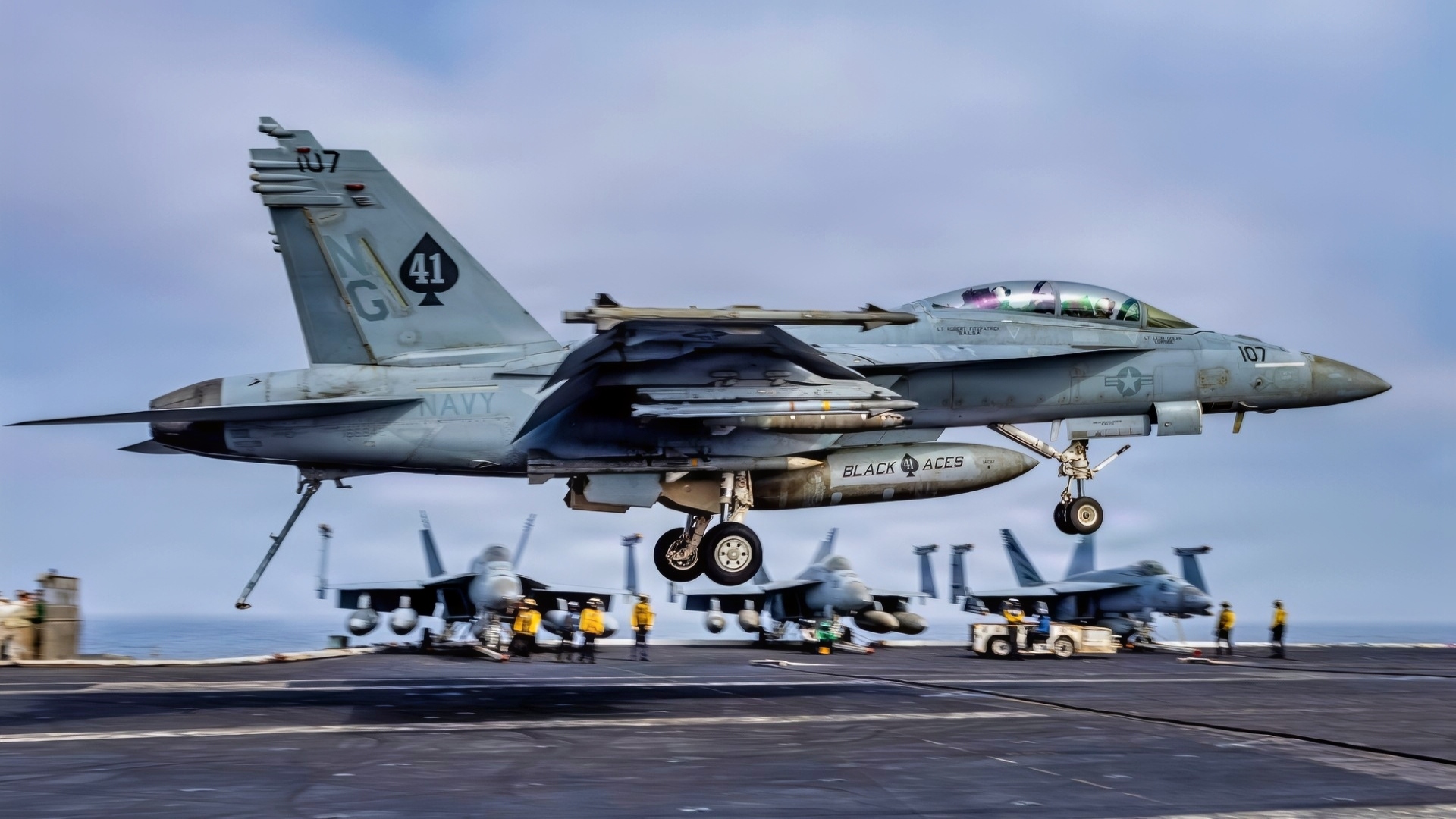
The U.S. military campaign against Iran has entered its eighth month, and the cost of the war is feeding into the 2026 midterm elections through gasoline prices and a constitutional fight over war powers. In Europe, Germany's study of whether to join GCAP has Japan watching its 2035 in-service deadline closely. Russia's next-generation Laika-class submarine is still a design more than a decade after work began, and the U.S. Marine Corps has scheduled an early 2027 technology demonstration for cargo drones. The threads look scattered, but they point to the same reality: equipment programs and battlefield employment are increasingly constrained by industrial coordination, domestic politics and organizational capacity.
United States: The Iran war turns foreign policy into an election issue
Voting politics in the 2026 U.S. midterms are now tangled up with the military campaign against Iran: the war has dragged into an eighth month without a decisive result, and national gasoline prices have risen sharply. To ease fuel-cost pressure before the vote, the Trump administration unilaterally lifted sanctions on Russian diesel, a step at odds with congressional intent. Polling meanwhile suggests Democrats could take control of Congress. [1]
The conflict was meant by the Trump administration to be a quick, made-for-television victory, but it has turned into a war of attrition: expensive U.S. Navy assets are being tied down against low-cost drones, and global energy markets have been badly disrupted. That means foreign adventurism and presidential electoral survival are now deeply intertwined. If Democrats win Congress as the polls suggest, a direct collision over war powers next year will be hard to avoid, with an energized anti-war base pressing the legislature to use its power of the purse to rein in the White House. [1]
Europe's sixth-generation fighter: Germany wants in on GCAP, Japan worries about the clock
Britain, Japan and Italy launched GCAP in December 2022 with the goal of fielding a sixth-generation fighter by 2035 to replace the British Typhoon and Japan's F-2. German Chancellor Friedrich Merz has confirmed that his government is analyzing a possible GCAP entry and discussed the prospect with Japanese leaders during a recent visit to Tokyo. Germany's turn toward GCAP follows the breakdown of FCAS, its project with France and Spain, in a fight between Dassault and Airbus over leadership and intellectual property. [2]
Tokyo's concern centers on schedule. Japan urgently needs to replace its aging F-2 fleet and has therefore held firm to GCAP's 2035 target. If Germany joins and brings Airbus a larger industrial share, existing contracts, IP agreements and design work splits would all have to be reopened, and the division of labor among BAE Systems, Mitsubishi Heavy Industries and Leonardo would become more complicated. Canada joined as an observer in July, and Bombardier signed with BAE Systems in late October; as of November 2026, GCAP still has three full members. [2]
For Berlin, arriving late means limited leverage: industrial development among GCAP's original members is already well advanced, and German firms might fare worse inside GCAP than they did in FCAS. For GCAP, enlargement is not simply a matter of adding a partner but of rebalancing industrial share, technological sovereignty and the 2035 milestone. Any reopening of contracts could erode the schedule Japan cares about most. [2]
Russia: The Laika-class submarine is still a design
Russia's Project 545 Laika-class, once code-named Husky, was pitched as a fifth-generation multipurpose nuclear submarine to replace the Yasen-class and the Soviet-era Akula, Sierra II and Victor III boats. The Malakhit design bureau began work in 2014, signed a contract with the Russian Ministry of Defense in 2016 and completed the preliminary design in 2019. More than a decade later, however, the project remains a design concept. [3]
Public specifications come mainly from a model displayed in 2017: a Yasen-like teardrop hull, a conformal bow sonar with six 533 mm torpedo tubes firing forward, roughly 11,340 tons submerged, a top speed of 35 knots, a diving depth of 600 meters and 90 days of endurance, plus vertical launch systems for Oniks, Kalibr and Zircon missiles. The Laika-class's actual performance remains classified, and the 2017 model offers only limited clues. [3]
On the public timeline, the program has stayed at the level of design work, contracts and model displays, with no clear sign that construction has begun. For an undersea force still built around the Yasen-class and Soviet-era submarines, a new generation still has to cross industrial and budgetary thresholds before it moves from concept to serial production, and its combat value will ultimately depend on the pace of construction, testing and commissioning. [3]
U.S. military: TRUAS Increment II cargo drone enters demo preparations
The U.S. Marine Corps and Navy will hold a battlefield cargo-drone technology demonstration in Huntsville, Alabama, from January 25 to February 5, 2027, for Increment II of the Tactical Resupply Unmanned Aircraft System, or TRUAS. According to an announcement by the Navy's Air Warfare Program Management Office, TRUAS Increment II aims to provide an organic aerial distribution capability for small-unit logistics across the last tactical mile in expeditionary advanced base operations and distributed operations. [4][5]
Contractors will fly up to five sorties and demonstrate ground setup and flight preparation. The first flight requires carrying a 100-pound payload up to 40 nautical miles in no-wind conditions, delivering the cargo automatically or under manual control, and returning to the launch site without refueling. The second requires delivering a payload of 150 pounds or more out to 10 nautical miles. The drone must fly at least 50 knots and no higher than 1,000 feet, and it must be able to launch and recover without mechanical equipment such as a catapult, arresting net or cable. [4][5]
The announcement also lists more demanding targets: operating altitude should eventually reach 4,500 feet and possibly extend to 8,000 feet, top speed should eventually reach 150 knots, and the aircraft should be able to fly in 20- to 30-knot crosswinds. The drone must autonomously assess landing zones in day and night conditions, detecting and avoiding people, equipment, buildings, excessive slopes and terrain obstacles, and its airborne sense-and-avoid capability should approach that of a human pilot operating under visual flight rules. The announcement stresses in particular that TRUAS should shorten the time from descent out of cruise altitude to the landing zone, reducing the window in which it can be detected and attacked. [4][5]
Profile: Mattis and the case for collaborative leadership
A retrospective on retired Marine Corps General James Mattis again cites his often-quoted judgment that 'wise leadership requires collaboration, otherwise it leads to failure.' Mattis was born on September 8, 1950, in Pullman, Washington, joined the Marine Corps Reserve in 1969 and was commissioned in 1972 through the Naval Reserve Officers Training Corps. He held a history degree and did not come out of a service academy. As a rifle platoon commander he relied on sergeants who knew the ranks better than he did, an experience that later shaped his emphasis on noncommissioned officers and small-unit initiative and earned him the nickname 'warrior monk.' [6]
Mattis went on to command Marines in Afghanistan and Iraq and later served as U.S. secretary of defense. The retrospective argues that his career shows that while military command is inherently hierarchical, successful leadership cannot rest on orders alone; it also requires teamwork and trust. The argument is less a battlefield aphorism than a summary of how organizations run: however advanced the technology, people still make the judgments, coordinate and execute. [6]
The through-line: battlefield, industry and organization
Taken together, these threads mark three intersection points in the current defense debate. First, battlefield attrition quickly turns into domestic political cost: the Iran war is shaping the U.S. midterms through gasoline prices and the war-powers dispute, and military action is no longer an 'external issue' disconnected from elections. Second, the success of equipment programs increasingly depends on industrial coordination: the GCAP enlargement fight looks like a question of membership numbers but is really about redistributing contracts, intellectual property and workshare, while the long design phase of Russia's Laika-class shows how hard it is to compress development timelines for a new generation of platforms. Third, unmanned logistics is becoming a foundational capability for distributed operations, and the TRUAS demonstration bundles autonomous obstacle avoidance, runway-independent launch and recovery, and survivability requirements into a single set of specifications. Mattis's argument about collaboration is a reminder that technical specifications ultimately come down to coordination among organizations and people. The next concrete windows on how these threads develop will be the struggle between Congress and the White House over war powers, whether GCAP formally expands, whether the Laika-class reaches a construction milestone, and the results of the TRUAS demonstration. [1][2][3][4][5][6]
Sources
- [1] The 2026 Midterms Is the Foreign Policy Election and Donald Trump Will Lose · 2026-11-03 20:54 · www.19fortyfive.com
- [2] Germany Wants Into the GCAP 6th-Gen Fighter. Japan Fears Berlin Would Push the J · 2026-11-03 07:51 · www.19fortyfive.com
- [3] Russia’s New Laika-Class Nuclear Attack Submarine Summed Up in 1 Word · 2026-11-03 21:02 · www.19fortyfive.com
- [4] Defense contractors to demo cargo drones for US Marine Corps · 2026-11-04 01:56 · www.defensenews.com
- [5] Defense contractors to demo cargo drones for US Marine Corps · 2026-11-04 01:56 · www.militarytimes.com
- [6] Years Later, General James ‘Mad Dog’ Mattis and His Line on Leadership and Failu · 2026-11-03 08:31 · www.19fortyfive.com