From 1,452 Badminton Rallies to 155 Apps Saying No: AI Deployment Enters a Real-World Validation Phase
Updated · 2026-10-18 11:05 · 6 sources cited
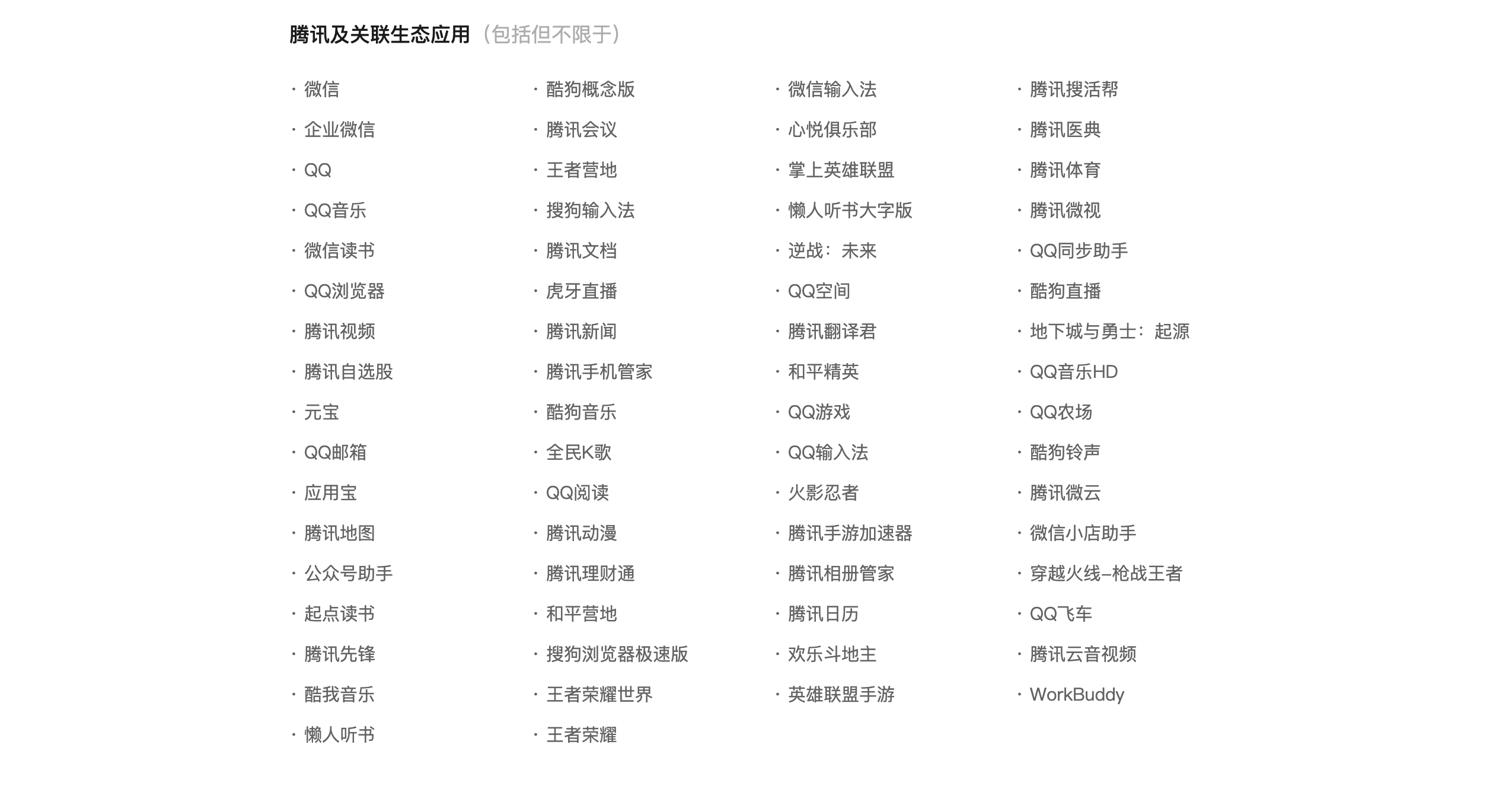
The AI industry is turning 'can it be used' into 'can it be used reliably in the real world.' On one side, a robot is proving that motion control has moved out of the lab with 1,452 consecutive rallies and more than RMB 100 million in financing; on the other, a mobile AI assistant has been rejected by 155 apps, and large models are competing for developers with half-price APIs and long-horizon tasks. In the capital market, Character.AI, once valued at USD 5 billion, has entered a bankruptcy auction. These threads point to the same question: when AI enters real scenarios, technology, ecosystem, and commercial costs must all pass the test at the same time.
Behind 1,452 Rallies: Sports Robots Move from Demos to Engineering Validation
On December 22, 2025, a badminton robot from Zhejiang Shenchen Kaidong exchanged 1,452 consecutive rallies with a human player at the Shaoxing Hangzhou Bay Joint Innovation Center and received Guinness World Records certification for the project 'most consecutive badminton returns by a mobile robot.' According to public reports, the robot can recognize an incoming shuttlecock in about 0.5 milliseconds, swing at 30 meters per second, and smash at more than 250 kilometers per hour; the team says it has achieved full-stack independent development from the body and motion control to visual perception and AI algorithms, and holds more than 100 domestic and international patents.[1] The significance of these numbers goes beyond 'it can play.' A shuttlecock is light and its trajectory is easily affected by airflow. Against a real person, the direction, speed, and landing point of incoming shots keep changing, so the robot must complete perception, prediction, decision-making, and execution in an extremely short time. Shenchen Kaidong sees it as a technology carrier for a general physical motion platform. Its early VaRSM system covered three racket sports: table tennis, tennis, and badminton. A 2025 ICRA paper reported a 94.5% success rate returning serves from a ball machine and a 90.7% success rate in consecutive rallies with humans.[1] From a lab prototype to a Guinness record, what has been publicly validated is the system's stability under long duration, high intensity, and human opposition; but commercialization still depends on cost, delivery, and the ability to replicate scenarios.[1]
When an AI Assistant Can Tap the Screen, 155 Apps Choose to Close the Door
Doubao mobile assistant released its consumer version on September 14, 2026, and started a 30-day public comment period for the 'Screen Automation Operation Declaration Agreement,' which ended on October 14. The final rejection list shows that 155 third-party apps explicitly disabled AI automated operation permissions, including 66 from Tencent, 23 from Alibaba, 11 from Meituan, and 14 from Kuaishou, with AI products such as Kimi and DeepSeek also on the list.[2] The list makes public a conflict previously hidden in risk controls: AI assistants rely on system-level permissions to read the screen and simulate taps, and can complete cross-app tasks for users, but they also touch the traffic gateways and commercial loops of super apps. SAEP tries to return the choice to developers, allowing them to declare whether to open access and which pages and functions to open; apps that have explicitly refused will not be operated automatically, and users can still use them manually.[2] More practical resistance comes from security and liability. Once AI operates high-risk scenarios such as payments, logins, and content publishing on behalf of users, there is still no unified industry standard for how to divide liability for fraudulent charges, mistaken posts, and account anomalies among AI vendors, app platforms, and users; some apps' risk-control systems themselves classify simulated operations as unauthorized plug-ins or risky behavior.[2] The 155 apps are only a starting point; finer-grained permissions and benefit sharing remain contested.
Baidu Puts 'Intelligent Organizations' on the Agenda
On October 15, Baidu's official WeChat account announced five highlights of Baidu World 2026: the event will be held on November 12 at the Beijing National Convention Center Phase II under the theme 'The Next Act: Intelligent Organizations,' with one main forum, 12 sub-forums, more than 30 AI open classes, and a 6,000-square-meter AI exhibition area.[3] Robin Li will deliver the annual keynote, and Baidu will also showcase the latest upgrade of its full-stack AI layout spanning chips, cloud, models, and agents, and may launch enterprise AI products.[3] Unlike past events that emphasized efficiency gains from single-point tools, this conference puts 'organizational evolution' at the center: sub-forums cover AI office work, scaled Agent deployment, talent and organizational vitality, as well as vertical scenarios such as embodied intelligence, marketing, AI gaming, automotive, and government affairs; AI open classes range from cognition and methods to innovation practices.[3] This reflects an industry shift: enterprise AI adoption is moving from individual efficiency to process restructuring, and how to turn 'fragmented AI' into organizational capability has become a new deployment question. Whether the conference can offer a reusable path still depends on the quality of product launches and industry case studies.[3]
Sichuan Embodied Technology Raises More Than RMB 100 Million, Targets 10,000-Unit Capacity
Recently, Sichuan Embodied Humanoid Robot Technology Co., Ltd. completed a Pre-A funding round of more than RMB 100 million. This round is coordinated with support for a humanoid robot pilot maturation project, forming a three-level state-owned capital linkage across Sichuan province, city, and county. The funds will mainly be used for iterative R&D of 'Aiqiu,' construction of a 10,000-unit production base, and building a sales system.[4] Unlike the route that emphasizes motion records, EIR takes 'emotional companionship' as its native product goal, proposes Emotion Native, and presents bionic expressions through a 3D ultra-short-throw projection facial solution, balancing cost and mass-production feasibility; Aiqiu starts at RMB 98,000, providing a specific competitive reference point for small and medium-sized bipedal humanoid robots.[4] The company says its core team comes from the University of Electronic Science and Technology of China, advances full-stack self-development around the body, core algorithms, and key components, and uses the EIR HARNESS architecture to connect perception, interaction, memory, navigation, and motion capabilities, building an integrated pipeline of data collection, model training, and deployment inference for full-body VLA.[4] Its three product lines—Aiqiu, Tianxun quadruped, and Tianxing humanoid—have entered batch delivery. The mass-production base in Deyang Kaizhou New City is expected to start production by the end of 2026 and, as planned, move from thousands of units to 10,000 units.[4] Whether emotional interaction can support scale depends on data feedback from real use and cost control.
Gemini 4 Woos Developers with Long-Horizon Tasks and a Half-Price API
Google Gemini 4 Argon has gradually opened to global developers, enterprises, and paid subscribers, with a focus on strengthening coding, professional knowledge work, and continuous execution of complex tasks, while continuing to advance visual understanding, spatial reasoning, and tool calling.[5] Google says it reaches the level of GPT-6 Astra and Opus5.5 in its own evaluations, and on the third-party Artificial Analysis Intelligence Index, Argon High and the two competitors are tied at 53 points; more direct pressure comes from price: the API costs USD 2 per million input tokens and USD 10 per million output tokens, with the offer valid until November 30 and returning to USD 4 and USD 20 from December 1.[5] Google summarizes the core upgrade as stronger long-horizon task execution: the model no longer only answers questions, but understands the goal, looks up information, calls tools, modifies code, and checks results. In a Python project of about 205,000 lines, Argon worked unattended for 11 consecutive hours, proposed six optimization plans involving 32 files, ran 16,892 tests, and ultimately two were merged, reducing long-session memory preparation overhead by about 40% and package import time by 21%.[5] In the Chromium project, it helped complete an architecture refactor involving hundreds of files, compressing work originally expected to take months into weeks; in Gemma4E2B inference optimization, throughput under a specific configuration rose from about 37,900 tokens per second to more than 108,000 tokens per second.[5] These cases show that large-model competition is shifting from 'leaderboard scores' to 'whether it can continuously complete tasks in real engineering,' but complex multi-agent tasks still have gaps, and the effects of large-scale use still need to be observed.[5]
Character.AI Bankruptcy Auction: Why the Emotional Business Could Not Hold Up
On October 12, Character.AI filed for Chapter 11 reorganization in a U.S. court in Delaware, starting a court-supervised asset auction. Disney has reached a stalking-horse bid agreement with it: USD 20 million for a non-exclusive perpetual license to some intellectual property, plus transitional technical services from a group of former employees; the transaction does not include the company entity, product app, or user assets, and the auction window is expected to close in late November to early December.[6] This AI companion star, co-founded by core authors of the Transformer paper, once reached a peak valuation of USD 5 billion. In March 2023, when a16z led a USD 150 million round, its valuation was USD 1 billion; in September of that year, market rumors said it would raise at more than USD 5 billion, but that round was ultimately not completed.[6] Its business model was built mainly on free use with a minority paying: subscriptions cost USD 9.99 per month, revenue from 2023 to 2025 was about USD 15.2 million, USD 32.2 million, and USD 50 million respectively, and monthly active users stayed around 20 million for a long time, translating to about USD 2.5 in annual revenue per user, while inference compute consumption continued.[6] In August 2024, Google obtained a technology license for about USD 2.7 billion and brought the founder and about 30 researchers back to DeepMind; after the core team was pulled away, Character.AI abandoned self-developed large models, monthly active users fell from a peak of about 28 million in mid-2024 to around 20 million, and in 2025 it began inserting ads for free users.[6] Disney has gone from a past target of copyright infringement lawyer letters to a bidder for technology assets, showing that the rights holder wants character interaction technology, not to continue operating this app; if no one takes over, the platform will move toward shutdown, and characters and chat records created by tens of millions of users face the risk of disappearing.[6] Emotional companionship can bring high retention, but it has not translated into revenue covering compute costs, a common challenge for generative AI consumer applications.
Summary: AI Deployment Enters a 'Real-World Validation Phase'
Putting these threads together, the competitive focus of the AI industry is shifting from 'demo effects' to 'real-world validation.' Robots must prove that motion control can be engineered through consecutive rallies, batch delivery, and mass-production bases; mobile AI assistants must find an accepted boundary between system permissions and the app ecosystem; and large models are competing for developers with long-horizon tasks, engineering cases, and half-price APIs, while being tested on cost and reliability.[1][2][5] At the capital level, Sichuan Embodied Technology's more than RMB 100 million financing stands in sharp contrast to Character.AI's bankruptcy auction: the former bets on embodied intelligence moving from prototypes to 10,000-unit capacity, while the latter shows that high valuations, high compute consumption, and weak willingness to pay are difficult to balance over the long term.[4][6] Next, what is worth watching is the real failure rate and maintenance cost of robots after mass production, whether AI agent permissions can form industry standards, and whether the reliability of large models in long tasks is sufficient to support enterprise procurement. Baidu World 2026's choice of 'intelligent organizations' as its theme also shows that demand on the enterprise side is shifting from tool procurement to organizational capability restructuring.[3] The answers to these questions will determine how much sustainable business this round of AI enthusiasm can leave behind.
Sources
- [1] 中国机器人羽毛球连打1452拍!拿下吉尼斯,波士顿动力大佬被硬控 · 2026-10-16 13:47 · www.qbitai.com
- [2] 第一款 AI 手机,被半个互联网「拒」了 · 2026-10-16 10:18 · www.geekpark.net
- [3] 百度世界2026五大亮点曝光,企业和开发者值得关注什么? · 2026-10-16 14:07 · www.qbitai.com
- [4] 超1亿元融资砸向四川具身科技!要把「情绪价值」卖进千家万户 · 2026-10-16 14:17 · www.qbitai.com
- [5] 刚刚,Gemini 4终于来了:谷歌重回御三家,API限时半价 · 2026-10-16 13:04 · www.qbitai.com
- [6] 巅峰估值 50 亿美元的 AI 独角兽,何以不到 0.1 折贱卖 · 2026-10-16 10:22 · www.geekpark.net