Apple Intelligence Cleared in China, Deezer Adds AI Music Filter, Enterprise AI Tools Raise Funding
Updated · 2026-10-15 13:35 · 6 sources cited
AI is shifting from a race over model capabilities to real-world access, distribution, and workflow transformation. Chinese regulators have approved Alibaba's Qwen and Tongyi Wanxiang to support Apple Intelligence in mainland China, opening a path for Apple to fill in a core AI feature; music streaming service Deezer is preparing to let users filter AI-generated tracks; enterprise messaging tool Zenzap and sales research platform Floqer have respectively raised funding and grown revenue; and Day 2 of TechCrunch Disrupt 2026 puts AI hardware, robotics, public safety, and investment center stage.[1][2][3][4][5][6]
Apple Intelligence Wins Key Regulatory Approval in China
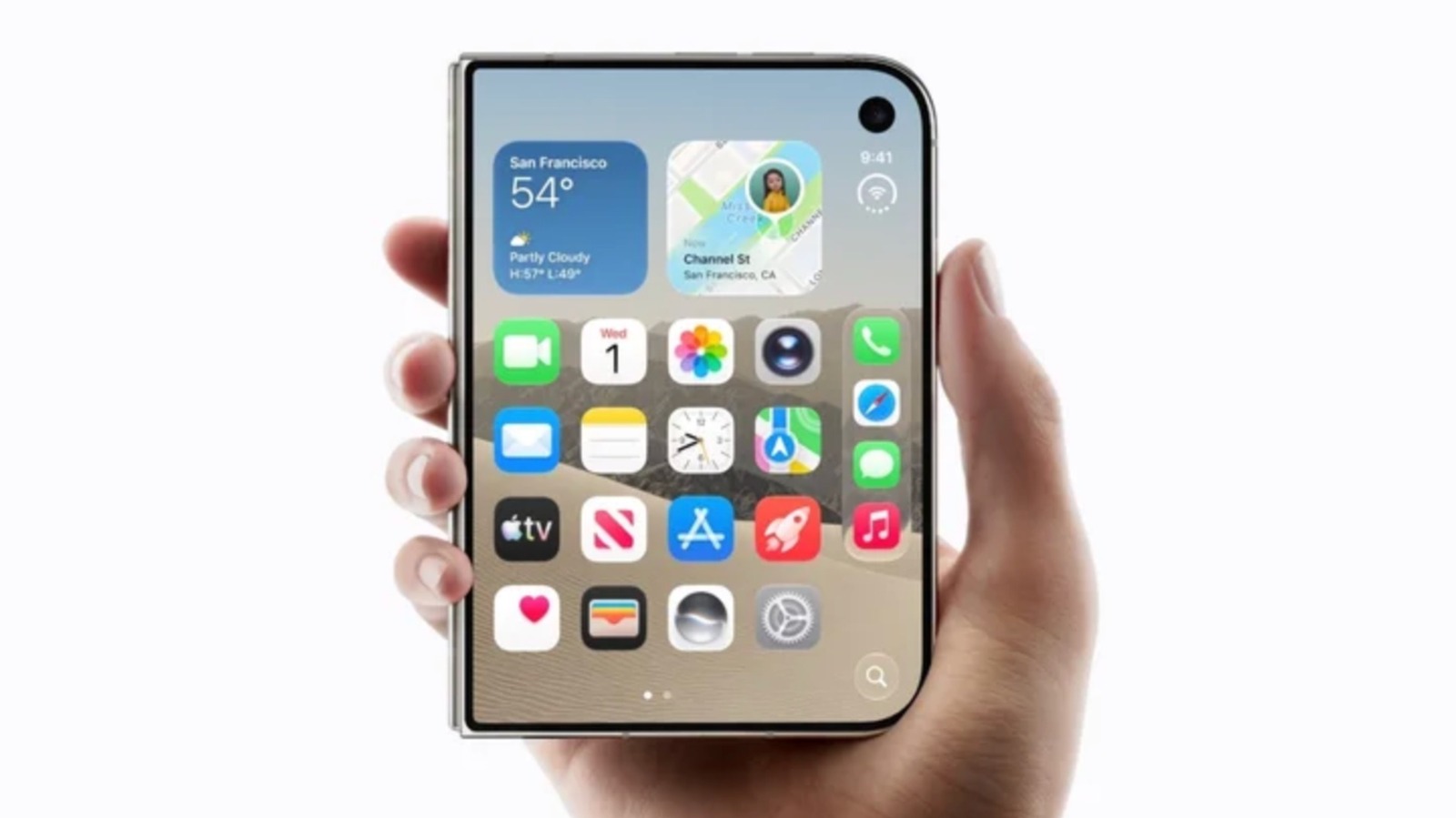
According to the South China Morning Post, China's Ministry of Industry and Information Technology has approved Alibaba's Tongyi Qianwen (Qwen) and the AI image and video tool Tongyi Wanxiang to provide model support for Apple Intelligence in mainland China. Apple had already received clearance to launch Apple Intelligence in mainland China back in July, but it has not yet officially rolled it out. The updated filings also include network access permits for the iPhone Duo and 18 Pro, with the iPhone Duo set to go on sale in China next week and the new Siri AI as one of its flagship software features. Much of Apple Intelligence's feature set is already available in Hong Kong, but mainland China's complex AI and privacy laws have forced Apple to be patient. Nearly two years after its US launch, this core feature is only now nearing one of Apple's fastest-growing markets. Apple previously worked with Google and OpenAI in the US to train models and hand off complex questions, while reports show Apple sought partnerships with Chinese AI companies as early as the start of 2025, when Alibaba was already named; this summer confirmed that Qwen would be at the core of compatible devices.[2]
Deezer Lets Users Filter AI-Generated Music With One Toggle
Deezer said on Tuesday that it is working on a new toggle that would let users filter AI-generated music from the platform, with the feature expected to launch before the end of the year. When turned on, AI-generated tracks, albums, and related artists will be hidden from search results. Deezer CEO Alexis Lanternier said in a statement that users have clear demand for filtering AI music, and the company is now giving everyone the option to remove this content completely from their streaming experience and focus only on human creators and works. He added that the explosion of AI music on the platform was one of the reasons for the feature. Deezer cited a survey from last year showing that around 45% of Deezer customers wanted to remove AI music from their feeds. The company added AI detection tools last year, when AI-generated tracks accounted for 10% of daily uploads. By July, Deezer said more than 50% of daily uploads were AI-generated tracks, averaging 90,000 per day. Other platforms have different policies: Bandcamp bans AI tracks entirely, Tidal cuts off monetization for AI music uploaders, and Spotify only labels AI tracks and artists more prominently. In August, Variety reported that Apple Music also planned to label AI tracks by the end of the year.[3]
Zenzap Raises $44M to Embed AI Context in Enterprise Chat
Many businesses still use WhatsApp, Telegram, Discord, or iMessage to communicate with employees and exchange documents and data. Guy Weiss founded Zenzap to solve this problem: it is a private messenger with AI that helps companies communicate with employees and gives staff organizational context while staying within IT and security rules. The company has raised $44 million from investors including Bessemer, Lightspeed, The Garage, and individual investors such as Wix president Nir Zohar and former EY general manager Yoram Tietz. This is Weiss's first fundraise; he bootstrapped e-commerce marketing platform StuccoMedia in 2012, sold it to Market Group in 2015, spent a few years as an investor, and founded Zenzap in 2022. He said he initially did not want to raise funding because his first startup was very successful and he was afraid of failing as a second-time founder; Bessemer partner Adam Fisher convinced him that the company needed capital to expand. Zenzap targets industries including hospitality, construction, healthcare, and fast food. Weiss believes WhatsApp or iMessage do not meet IT requirements, while Slack and Microsoft Teams are not designed for mobile-first daily use cases. Zenzap's free tier offers group chat, direct messages, task management, calendar integration and schedule management, plus AI voice chat and search. Paid plans start at $51 per month for up to 20 users, unlocking voice and video calls, smart task prioritization, task templates, more file storage, and the ability to use AI search in the workspace and turn messages into tasks. The company also offers workflow automation AI agents, AI-assisted voice notes, and call transcription, with credit-based pricing. Its customers include FedEx, Dollar General, Taco Bell, Starbucks, Casey's, and Regal.[4]
Floqer Uses AI Agents to Automate Sales Prospect Research
Floqer is an autonomous customer knowledge platform that provides B2B sales and marketing teams with an AI-powered database that continuously collects, organizes, and updates the information used to understand customers. The company pitched on the Startup Battlefield stage at TechCrunch Disrupt 2026 on Wednesday and told TechCrunch it plans to open-source the technology behind its autonomous customer knowledge database, targeting an early 2027 release pending security reviews. Floqer also says it has surpassed $1.2 million in annual recurring revenue, and that overall revenue has grown roughly tenfold over the past year. The company was founded by CEO Shivam Mahajan and Zaaheda Islam, who met at university; Mahajan previously worked as a software engineer at Kyndryl, and Islam as a senior data scientist at Axis Capital. Floqer's first product was not what it is today, but a Chrome extension called Super Chat, which let users log in with their ChatGPT account to understand information and take notes. The founders later found that enterprise customers were using the extension to clean up CRM data, work that was manual and lacked an established process, so they pivoted to Floqer. Sales and revenue operations staff often spend hours searching Google, LinkedIn, company websites, job boards, and more for companies and contacts that match a profile. Floqer lets users describe what they need, and an AI agent searches across sources and builds lists of companies and contacts. The company says the system can enrich account information with more than 100 third-party data sources; when it needs to verify an email or phone number, it uses a waterfall approach to check data providers one by one until it finds usable information. The system also continuously monitors changes across the web, and if a prospect changes jobs, gets promoted, or their company raises funding, updates can retrigger the workflow.[5]
TechCrunch Disrupt 2026 Day 2: AI Hardware, Robotics, and Investment Share the Stage
Day 2 of TechCrunch Disrupt 2026 is being held at Moscone West in San Francisco. The Expo Hall brings together more than 300 startups, and an AI-powered matchmaking system helps more than 10,000 founders, investors, startup teams, and technology leaders connect. Today's focus spans AI, with speakers from Nvidia, Waabi, Flock Safety, and Ricursive Intelligence, while Benchmark's full partnership also takes the stage. Conversations include robotics, AI hardware, public safety, and venture investment. Highlight sessions include Flock Safety's Garrett Langley discussing the future of AI, surveillance, and public safety; Benchmark's Jack Altman, Peter Fenton, Chetan Puttagunta, Everett Randle, and Eric Vishria sharing What We Believe Now; and Ricursive Intelligence's Anna Goldie and Azalia Mirhoseini discussing AI beginning to design its own hardware. Startup Battlefield continues with health tech and life sciences, as well as enterprise and security tracks, competing for a finals spot and $100,000 in equity-free funding.[1]
Disrupt's Final Two Days: AI Stage and Enterprise Agent Themes Continue
After Day 1 of TechCrunch Disrupt 2026, the event continues on October 14 and 15 at Moscone West in San Francisco, with 50% off all ticket types. Disrupt Stage speakers include actor Mark Wahlberg, Replit CEO Amjad Masad, five Benchmark partners, Amazon's Panos Panay, and Bluesky CEO and COO Toni Schneider and Rose Wang. Two flagship AI Stages will feature OpenAI enterprise product lead Alexander Embiricos discussing the company's Dots agents launch, with leaders from Anthropic, Hugging Face, Clay, and other organizations also participating. The event also includes more than 320 exhibitors, breakouts and interactive roundtables, networking opportunities, and Side Events across San Francisco, while the Startup Battlefield 200 pitch competition continues on the Disrupt Stage. For enterprise attendees, the AI Stage topics point directly to the next phase of competition in agent productization and the open-source model ecosystem.[6]
Common Thread: AI Moves Into Compliance, Distribution, and Deeper Workflows
From Apple Intelligence's approval in China to Deezer letting users filter AI music, and from Zenzap and Floqer targeting enterprise communications and sales research, these developments together show that AI competition is expanding from the model layer to compliance access, content governance, and specific functional workflows. Apple needs local models to satisfy mainland China regulation, music platforms are responding to an explosion of AI supply with detection, filtering, and labels, and enterprise tools are embedding AI agents into communication, tasks, and customer data maintenance. The TechCrunch Disrupt 2026 agenda further places AI hardware, robotics, public safety, and investment on the same stage, while OpenAI's Dots agents and the participation of multiple model companies show that enterprise agents remain a focus for startups and capital. Going forward, watch the actual rollout pace of Apple Intelligence in mainland China, user feedback after Deezer's filter launches, paid enterprise adoption at Zenzap, Floqer's open-source progress, and the further productization of enterprise agents from Disrupt.[2][3][4][5][6]
Sources
- [1] TechCrunch Disrupt 2026: Day 2 · 2026-10-14 22:30 · techcrunch.com
- [2] Alibaba AI models cleared for use in Apple Intelligence in China just in time fo · 2026-10-14 23:36 · www.engadget.com
- [3] Deezer will soon let you filter out AI-generated music · 2026-10-14 23:16 · techcrunch.com
- [4] Zenzap raises $44M for its AI chat app that aims to replace WhatsApp in the work · 2026-10-14 23:08 · techcrunch.com
- [5] Floqer’s AI agents research sales prospects so teams don’t have to · 2026-10-14 23:00 · techcrunch.com
- [6] Save 50% on your TechCrunch Disrupt 2026 ticket and join the last 2 days in San · 2026-10-14 23:13 · techcrunch.com